

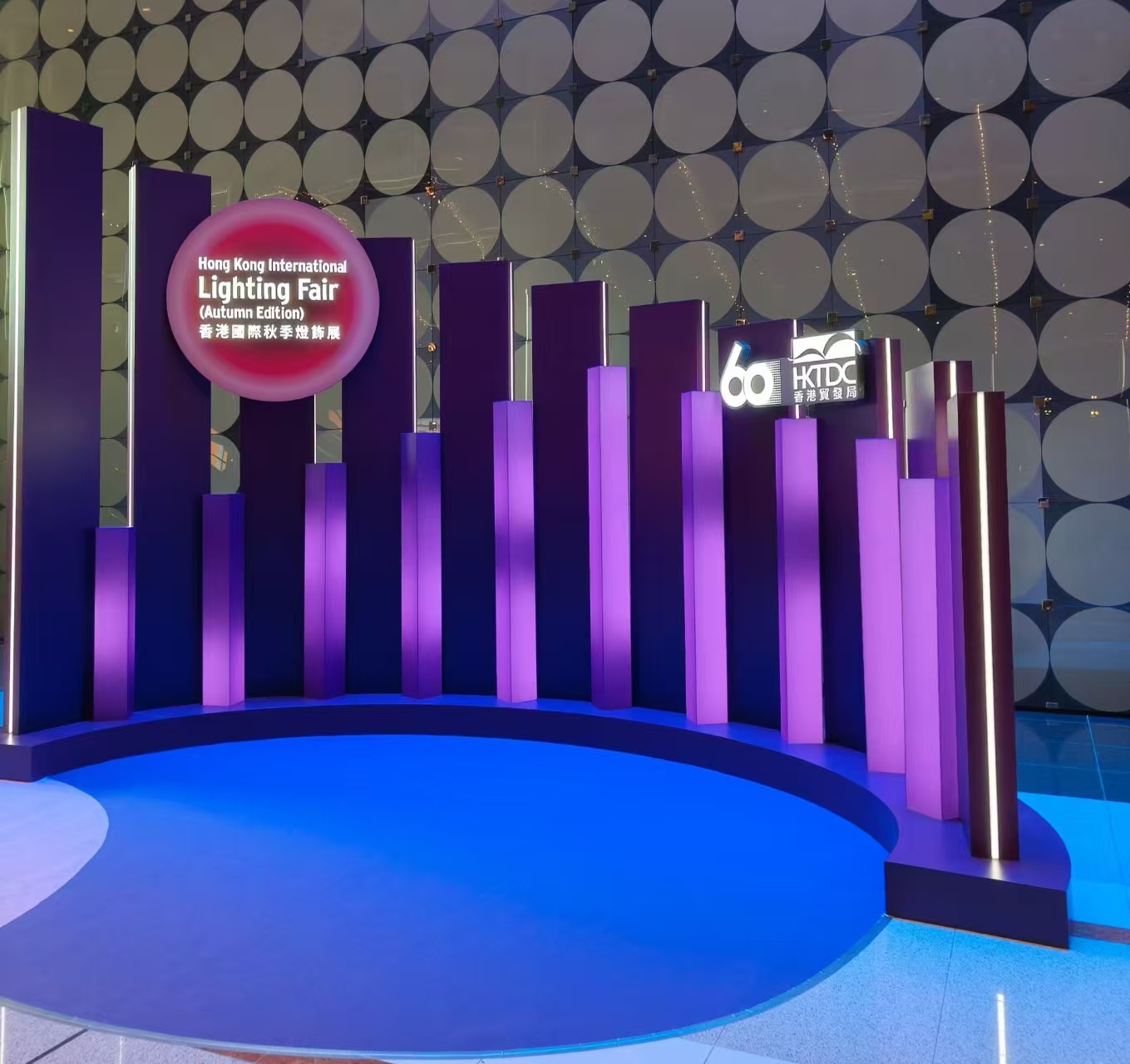
Beyond Illumination: What the 2026 Hong Kong Autumn Lighting Fair Told Us About the Future of Light
#Lighting #SmartLighting #HumanCentricLighting #HKLightingFair #IoT #SustainableDesign #LED #LightingTrends
The booths are packed away, the demo scenes are dimmed, and the 28th Hong Kong International Lighting Fair (Autumn Edition) has officially closed its doors. But the signal it sent to the global lighting industry is still glowing.
Under this year’s theme “Future Lighting, Beyond Illumination,” the twin fairs brought together around 3,000 exhibitors from 20+ countries and regions, and drew close to 50,000 buyers worldwide . What we saw on the floor was not just “new products” — it was a clear sketch of where lighting is heading, and more importantly, what customers are actually asking for.
🌟 The Highlights: Four Things That Stood Out
1. Connected lighting became an experience, not a spec sheet
The “Connected Lighting Pavilion” returned with ~70 top brands — Signify, Casambi, TUYA, Inventronics, Dimon and more — but the difference this year was immersion. Buyers didn’t just see smart bulbs; they walked into a café, a mirror art space, even an F1 simulator, watching light shift with context in real time . The takeaway: smart lighting is no longer about “can it connect,” but “how effortlessly does it disappear into life.”
2. Human-centric lighting moved from concept to commercial
Signify’s Philips Sky, with VitaUp and BioUp light recipes, tuned color temperature to the body’s circadian rhythm. This wasn’t a prototype behind glass — it was a pitch-ready solution for offices, healthcare, hospitality and high-end residential . The message: light is now a wellness product, not just a utility.
3. Light + display converged
A new LED display solutions zone showcased transparent panels, flexible surfaces, and immersive visual-interaction systems. The line between “a luminaire” and “a screen” is blurring fast — especially for retail, culture, and tourism projects .
4. Green energy became embedded, not bolted on
The outdoor fair added a photovoltaic + energy-storage zone. Solar-integrated poles, off-grid nodes, and self-powered landscape lighting showed that sustainability is shifting from a compliance checkbox to a system design principle .
🔮 Future Trends Worth Betting On
- From single products to ecosystems. Compatibility with KNX, Matter, and major smart-home platforms is now table stakes. Buyers ask “what does it integrate with?” before they ask “what’s the lumen?”
- AI-driven ambient intelligence. Scene recognition, voice and image commands, learning user habits — “lights that adjust themselves” is moving from demo theater to default expectation .
- Health, aging, and emotion. Circadian lighting, anti-glare senior-care fixtures, and mood-aware spaces are opening new B2B channels in wellness, eldercare, and education.
- Lighting as an energy node. Especially in outdoor, industrial, and emergency scenarios, a luminaire is increasingly a small power system with sensors and storage attached.
- Design branding as the entry ticket. With ~500 premium brands in the “Hall of Aurora,” good engineering alone no longer wins. Form language, storytelling, and brand identity decide who gets specified.
🎯 How to Actually Capture Customer Needs
The fair also exposed a quiet gap: many exhibitors had great products but weak translation. The brands that won conversations did four things differently.
1. Sell the scenario, not the parameter
Don’t open with “160 lm/W, CRI 97, 50,000 hrs.” Open with: “Here’s what a guest feels when they walk into this hotel lobby at 7pm.” Customers buy outcomes — comfort, safety, efficiency, atmosphere.
2. Map the buyer’s ecosystem before pitching yours
A distributor in the Middle East, a designer in Northern Europe, and a smart-building integrator in Southeast Asia need completely different stories. Ask about their existing protocols, project type, and after-sales constraints first.
3. Make the demo do the convincing
Static catalogs lose to a 90-second live scene switch. If you can’t bring the experience to the booth, build a short video or digital twin. The product should prove itself without your explanation.
4. Listen for unspoken constraints
Certifications, lead times, spare-part policies, local compliance, and training for end-users often decide the order more than unit price. The best salespeople at the fair spent more time asking than presenting.
5. Follow up like a partner, not a vendor
Several exhibitors reported that real orders came 3–6 months after the show, from relationships nurtured with specs, references, and pilot support — not follow-up spam.
✨ The Real Lesson
Hong Kong Autumn Lighting Fair 2026 made one thing clear: the next decade of lighting is not about making light brighter — it’s about making light smarter, healthier, and more meaningful.
For brands, the edge won’t come from one hero product. It will come from:
- systems that integrate cleanly,
- designs that carry emotion,
- sustainability built into the architecture,
- and a team that can translate technology into a customer’s language.
The lights at the venue are off. The opportunities they pointed to are just turning on.
If you’re exploring smart lighting, human-centric solutions, or overseas market expansion, let’s connect — happy to share what we learned on the floor.
$previous_post_url = ''; $next_post_url = '';