

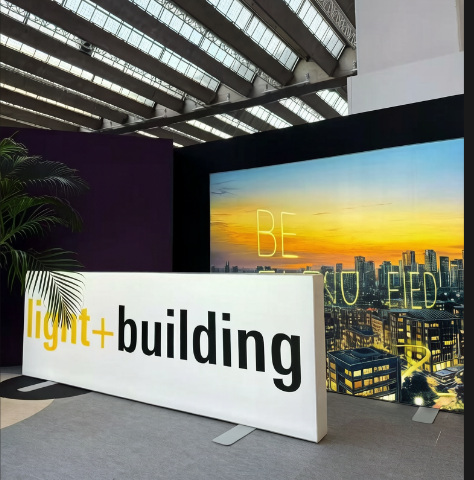
Light + Building 2026 Smart Controller Review: Key Trends, Innovations & Takeaways
Top 5 Smart Controller Innovations at Light + Building 2026
Light + Building 2026, held from March 8-13 in Frankfurt, proved once again to be the world’s premier lighting exhibition. The smart lighting controller sector emerged as the central attraction, occupying prominent areas in Halls 4.1 and 9.1. This year saw a 23% increase in exhibitors specializing in smart control systems, with an estimated €2.8 billion in projected transaction value for smart lighting solutions. The event drew over 150,000 professional visitors, solidifying its position as the global hub for lighting innovation and business.
1.Protocol Convergence: Matter 2.0 Becomes Standard
The industry-wide adoption of Matter 2.0 marked a significant leap forward. Major brands like Philips Hue, Signify, and Osram showcased controllers with seamless cross-platform integration. The new standard simplifies installation through QR code/NFC pairing, reducing setup steps from 15 to just 3, while ensuring reliable local execution of smart scenes even without internet connectivity.
2.Energy Intelligence: From Control to Grid Optimization
Beyond basic automation, controllers now feature AI-powered energy optimization. Systems learn user patterns and adjust brightness/color temperature automatically, achieving up to 40% energy savings. The most notable advancement was bi-directional grid communication, where controllers respond to real-time electricity pricing and support EU “Green Building” certification requirements. Many products now include carbon footprint tracking modules that display real-time energy savings.
3. Context-Aware Sensing & Interaction
Millimeter-wave radar technology has revolutionized presence detection. Unlike traditional PIR sensors, these controllers accurately identify human position, posture, and movement count, enabling “light follows you” scenarios. Advanced gesture control allows users to adjust brightness or change colors with simple hand motions, with some systems learning custom gestures (like drawing a circle to activate “movie mode”).
4.Professional-Grade Color & Dimming Performance
Theater-quality lighting has entered the residential market. Controllers now support HLC (High Lumen Color) standards with 98% NTSC color accuracy. True flicker-free dimming from 0.1% to 100% eliminates eye strain, while advanced algorithms automatically sync lighting with music rhythms or simulate natural daylight progression throughout the day.
5.Health & Wellness Integration
Wellness-focused controllers that regulate circadian rhythms gained significant attention. Systems adjust color temperature throughout the day to support natural sleep-wake cycles. Some premium models integrate with health wearables to create personalized lighting scenarios for focus, relaxation, or recovery.
7 Key Takeaways for Lighting Professionals
1. Experience-Centric Display Strategy
Successful exhibitors created complete room environments rather than product shelves. Each space addressed specific pain points with clear “problem-solution” labeling. Interactive stations allowing visitors to adjust settings and see immediate results proved most engaging.
2. Transparent Technology Education
Leading brands employed three-layer demonstration models: surface effects, exposed internal components, and interactive simulations of signal flow and algorithms. This approach catered to different audiences—end users, integrators, and developers—simultaneously.
3. Ecosystem Collaboration Showcases
Joint demonstrations combining lighting, audio, climate control, and window treatments highlighted true ecosystem thinking. Live programming challenges using open APIs encouraged developer engagement, while intelligent matchmaking systems connected potential business partners.
4. Data Visualization Builds Credibility
Real-time energy comparison displays showing cumulative savings, QR codes linking to real installation case studies, and prominent placement of certifications (CE, Design Plus awards) effectively communicated value and legitimacy.
5. Professional & Niche Applications Expand
Beyond residential applications, specialized controllers for medical lighting (circadian regulation), horticultural lighting (spectrum optimization), and museum lighting (conservation-focused controls) demonstrated growing professional market opportunities.
6. Design as Differentiator
The trend toward minimalist, integrated designs that disappear into interiors continued. The most praised controllers featured intuitive interfaces, premium materials, and designs that complemented rather than dominated living spaces.
7. The Service Opportunity
Several manufacturers introduced subscription-based models offering cloud services, advanced analytics, and regular feature updates, signaling a shift from product sales to ongoing service relationships.Smart lighting controllers have evolved from simple switch replacements to intelligent systems managing energy efficiency, human wellness, and emotional ambiance. Light + Building 2026 demonstrated that success in the global lighting market requires balancing technical innovation with user-centric design. The convergence of Matter protocol adoption, AI-driven optimization, and sustainable technology sets the direction for 2027-2028. Companies that master ecosystem integration while delivering tangible energy savings and enhanced living experiences will lead the next phase of the smart home revolution.
$previous_post_url = ''; $next_post_url = '';